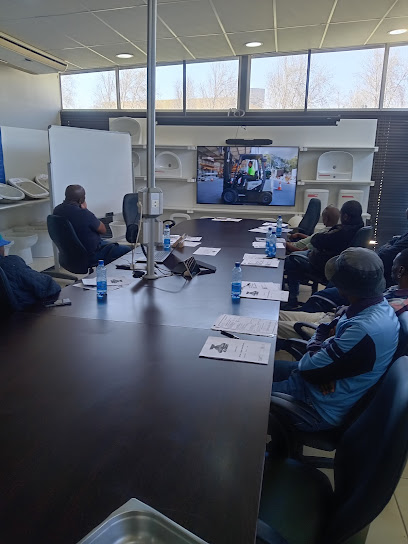
Tarlton Training Academy is a Occupational safety and health establishment in Mogale City Local Municipality, Gauteng, South Africa
Mogale City Local Municipality
Gauteng
South Africa
Sorry, no records were found. Please adjust your search criteria and try again.
Sorry, unable to load the Maps API.
Occupational safety and health services in Mogale City, Gauteng
In Mogale City Local Municipality, Gauteng, occupational safety and health (OSH) services are typically organised to assist a range of employers to meet legal obligations, protect workers, and improve workplace performance. Local businesses—from small enterprises to larger manufacturing and service organisations—often engage OSH practitioners to navigate the statutory framework, identify risks, and implement practical safety measures that suit South African conditions and local industry contexts.
Core service areas usually include hazard identification and risk assessment, safety management systems, and compliance advice with the Occupational Health and Safety Act and associated regulations. Practitioners help determine potential hazards across the workplace, such as chemical, physical, ergonomic, and biological risks, and then prioritise control measures in line with the hierarchy of controls. This process supports safer work environments in environments common to the region, including light manufacturing, construction, logistics, retail, and mining-adjacent activities.
Workplace safety programmes commonly feature a combination of policy development and practical training. Many organisations undertake written safety policies, procedures, and method statements tailored to specific tasks. Training offerings often cover general safety awareness, toolbox talks, permit-to-work systems, hot work procedures, fall protection, and equipment operation. In practice, training emphasises actionable steps, competent supervision, and ongoing reinforcement to foster a safety-conscious culture.
Health aspects form an integral part of OSH services in Mogale City. Occupational health screening programmes may be recommended or offered, including pre-employment medicals, periodic medical surveillance for noise or chemical exposure, and fit-for-work assessments. Where there are exposure concerns, services may extend to occupational hygiene investigations, air monitoring, noise assessments, and biological monitoring. Employers in high-risk industries are often guided on implementing medical surveillance plans in accordance with national standards and local best practice.
Emergency preparedness and incident management are emphasised within practical OSH programmes. A typical approach includes drawing up emergency response procedures, conducting drills, and establishing clear roles for staff and safety officers. Incident reporting and investigation procedures are encouraged to determine root causes, implement corrective actions, and monitor the effectiveness of improvements. Where incidents involve workplace injuries, guidance on workers’ compensation processes and liaison with relevant authorities is commonly provided.
Audits and inspections form a cornerstone of ongoing compliance. External OSH providers frequently perform periodic safety audits, worksite inspections, and documentation reviews to identify gaps and track progress. These audits help organisations prepare for regulatory inspections by the Department of Employment and Labour and reduce the likelihood of enforcement actions through demonstrable corrective action plans.
Practical considerations for organisations in Mogale City include acknowledging the local economic mix, where small to medium-sized enterprises may require scalable safety solutions. Access to accredited professionals with knowledge of South African legislation and local enforcement expectations is valuable for tailoring measures to available resources. Cost considerations often centre on the scope of services, frequency of audits, training needs, and the level of customised documentation required to demonstrate ongoing compliance.
When engaging OSH services, organisations typically expect clear communication, practical recommendations, and a realistic implementation timeline. Most providers emphasise collaborative approaches—sharing findings with management and workers, supporting the formation or strengthening of safety committees, and ensuring that health and safety practices align with operational realities. The overarching aim is to create safer workplaces, reduce downtime due to injuries, and support sustainable business performance within Mogale City’s diverse economy.