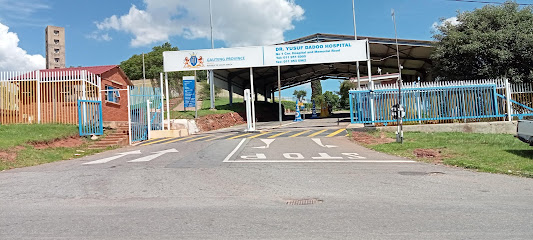
Dr Yusuf Dadoo Hospital is a Government hospital establishment in Krugersdorp, Gauteng, South Africa
Krugersdorp
Gauteng
South Africa
Sorry, no records were found. Please adjust your search criteria and try again.
Sorry, unable to load the Maps API.
Government hospital services in Krugersdorp, Gauteng
Government healthcare facilities in Krugersdorp, Gauteng, provide essential medical services to residents and the surrounding communities. As public institutions, these hospitals are typically funded and administered by provincial health departments, with a focus on delivering a wide range of affordable care to people who may rely on public funding or medical aid support. The experience for patients and visitors is shaped by local policies, resource availability, and the demand continuum that characterises public health systems in South Africa.
Patients commonly access services through a primary contact point such as reception or an outpatients’ desk, where administrative steps determine eligibility for public healthcare and direct patients to suitable departments. In general, treatment pathways are designed to manage urgent, elective, and chronic conditions in a manner aligned with government health objectives. The emphasis is on timely triage, appropriate referrals, and coordinated care across clinical teams, with attention to patient safety, infection control, and documentation standards that facilitate continuity of care.
Emergency care represents a cornerstone of government hospital services. Public facilities are often equipped to manage acute injuries, life-threatening conditions, and urgent medical problems, with patients prioritised according to established triage systems. After initial stabilisation, many cases are admitted for further observation or transfer to specialised units if needed. The emergency department workflow typically includes assessment by a clinical team, access to diagnostic imaging and laboratory services, and coordination with allied health professionals to plan ongoing management or discharge with clear instructions.
In-patient services span a range of wards and units, including general medicine, surgery, obstetrics, paediatrics, and sometimes specialised services depending on the hospital’s capacity. Government hospitals prioritise efficiency and patient throughput, aiming to optimise bed utilisation while maintaining safety standards. For patients requiring surgical intervention, procedures are scheduled in consultation with surgeons and anaesthetists, subject to availability of operating theatres, postoperative care, and rehabilitation needs. Maternity services commonly offer antenatal care, delivery, and postnatal follow-up within a public framework, with the option of affected families being able to access support services as needed.
Diagnostic and laboratory services are integral to the public healthcare system. Access to radiology, pathology, and other diagnostic tests is critical for accurate diagnosis and timely treatment decisions. In many facilities, basic imaging and laboratory work are available on-site, while more specialised tests may require external referrals or partnerships with larger tertiary centres. The aim is to provide dependable diagnostic information to support clinicians in making informed care choices for patients presenting with a wide spectrum of conditions.
Outpatient and chronic care provision form another major component. Public hospitals often deliver a broad suite of outpatient clinics, including general medicine, orthopaedics, dermatology, infectious diseases, and other disciplines. Chronic disease management programmes—such as hypertension, diabetes, HIV, and respiratory conditions—emphasise regular monitoring, medication adherence, patient education, and lifestyle guidance. Patients are typically scheduled for follow-up visits, diagnostic checks, and, when necessary, referrals to higher levels of care or community health services for ongoing support.
Practical considerations for accessing government hospital services in Krugersdorp include navigating appointment systems, understanding wait times, and compliance with essential administrative requirements. Language and communication play important roles, with staff often able to assist patients in multiple official languages. Financial considerations include the public funding model, potential costs for certain services, and the availability of social welfare or patient advocacy services to help navigate eligibility, transport, and accommodation where applicable.
Overall, government hospital services in Krugersdorp are designed to deliver comprehensive medical care to a broad population, prioritising essential health needs, safety, and equity. While resource constraints and regional variations may influence the patient experience, the core objectives remain the provision of urgent care, reliable diagnostics, and accessible treatment options geared towards improving community health outcomes across Gauteng.