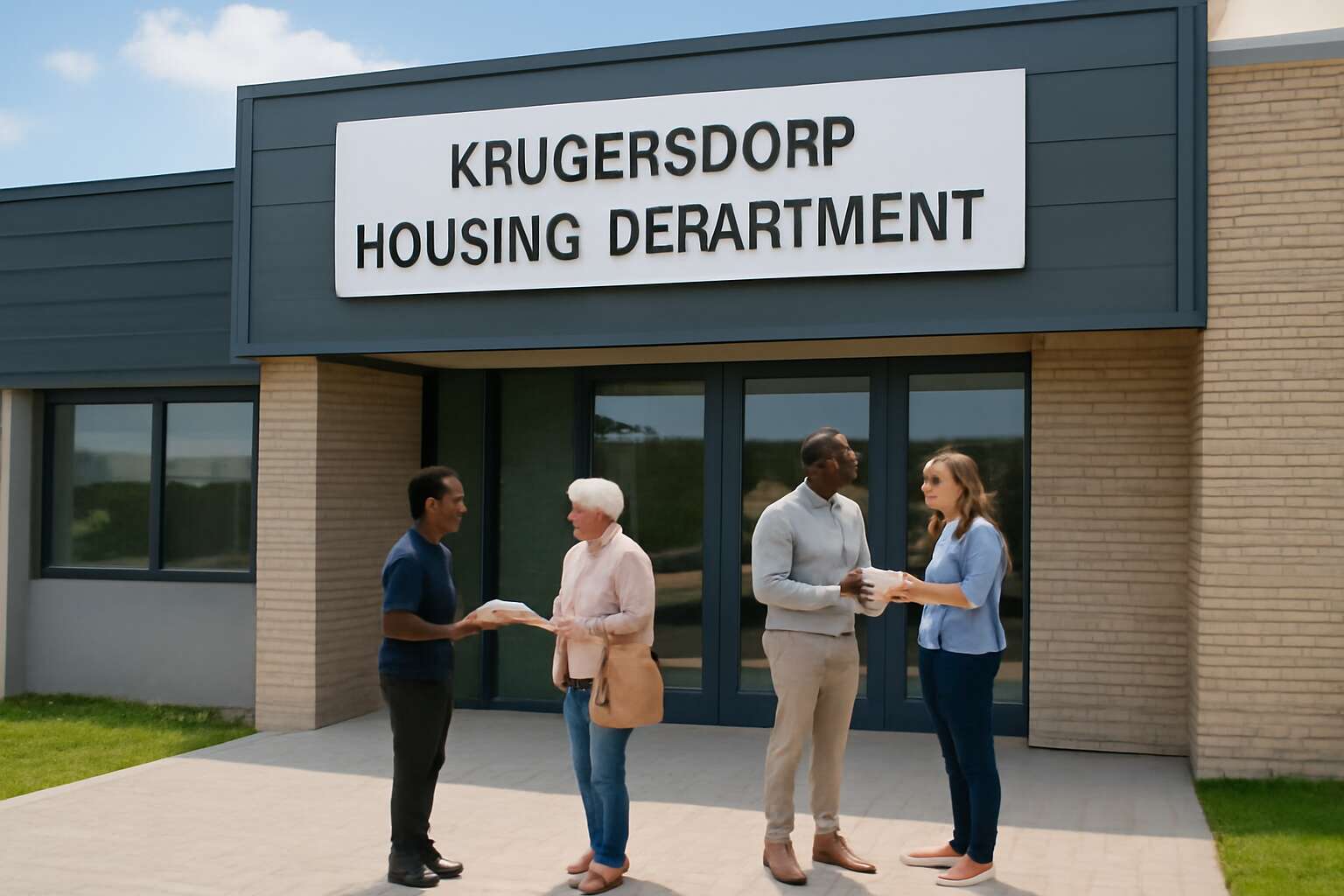
Understanding the Krugersdorp Housing Department
What services does the Krugersdorp Housing Department offer?
In Krugersdorp, the krugersdorp housing department isn’t about red tape; it’s about turning ambition into address labels. The team champions a practical, people-first approach, trimming bottlenecks and making housing feel accessible rather than mythical.
Understanding what services the krugersdorp housing department offers helps residents navigate the process with confidence. The department provides a range of core supports, including:
- Eligibility assessments and waitlist management
- Allocation of housing units and tenancy support
- Maintenance coordination and repairs
- Financial assistance programs and subsidies
From filing to follow-through, the department keeps communications clear and timelines realistic, aiming to be a steady partner in securing homes and maintaining them.
Role in housing allocation and policy updates
“Housing is a right, not a rumor,” some residents might say. The krugersdorp housing department makes that sentiment actionable by steering housing allocation with fairness and a dash of common sense. It isn’t about red tape; it’s about turning promises into doorstep addresses.
Understanding the krugersdorp housing department’s role in housing allocation means watching how policy updates sharpen the process. Criteria are clarified, timelines are published, and residents finally have predictable milestones instead of guesswork. Updates land through online dashboards, community notices, and friendly bulletins—because no one should chase a moving target.
- Transparent allocation criteria
- Timely policy update communications
- Open channels for resident feedback
These elements foster trust and ensure the department remains accountable to residents, turning allocation into real keys rather than enigmatic paperwork.
Organizational structure and key offices in Krugersdorp
Structure is the quiet engine behind every fair doorway. The krugersdorp housing department translates policy into presence, turning offices into pathways rather than puzzles. ‘Structure is the quiet architect of trust’ captures the department’s ethos across Krugersdorp.
Understanding its organizational structure means recognizing the core offices and how they interact to serve residents.
- Office of the Director and Head of Housing Services
- Housing Allocation and Compliance Office
- Finance and Budget Office
- Human Resources and Training
- Information Technology and Data Management
- Public Relations and Community Liaison
This alignment ensures accountability, accessible contact points, and a human face to governance. For residents, the krugersdorp housing department remains approachable through these offices, each serving as a touchpoint where policies become people.
Common terminology used by the department
Understanding the common terminology used by the krugersdorp housing department creates a map where there once was a maze. When terms are familiar, conversations become collaborations, and residents feel seen rather than shuffled from one office to another. The language is not abstract jargon; it is a quiet act of fairness, turning policy into a human dialogue rather than distant decree.
Here are essential terms you will encounter:
- allocation and waitlist
- eligibility criteria
- tenancy agreement
- housing subsidy
- transfer of occupancy
These terms, spoken in plain language, let people ask precise questions, track progress, and participate in the process rather than remain observers. The krugersdorp housing department invites residents to learn this vocabulary as a first step toward mutual respect and efficient service.
Eligibility Criteria and Application Process
Who qualifies for housing in Krugersdorp?
A municipal report reveals housing demand in Krugersdorp outstrips supply—and that is the doorway where eligibility begins. Who qualifies for housing in Krugersdorp? The landscape favors those with need, residency, and a plan for stability. I’ve witnessed how a doorway becomes a home when fairness leads the way.
- Be a Krugersdorp resident
- South African citizen or permanent resident
- Demonstrate housing need (unsafe or overcrowded)
- Not benefiting from another housing program
- Income and asset guidelines apply
Applying is a careful, hopeful process. To begin, contact the krugersdorp housing department to obtain an application form and guidance. The steps are straightforward, but honesty is essential to move from line to home:
- Obtain and complete the application form from the krugersdorp housing department
- Gather supporting documents: ID, proof of residence, income, family details
- Submit for verification and monitoring
- Attend any required intake interview
- Await status updates and housing list placement
Required documents for applications
Within Krugersdorp’s quiet cityscape, eligibility opens doors to a place to call home. To qualify, you must show residency, need, and prudence: be a Krugersdorp resident, a South African citizen or permanent resident, and prove unsafe or overcrowded conditions, with income and asset guidelines guiding fairness. The krugersdorp housing department oversees this threshold.
Applying is a careful, hopeful passage. To begin, obtain and complete the application form from the housing department; gather supporting documents, then submit for verification and monitoring. Expect intake interviews and a waiting list—patience matters.
- Obtain and submit the official form from the housing department
- Collect ID, proof of residence, income, and family details
- Submit for verification and ongoing monitoring
- Attend the intake interview if invited
Prepare these documents to accompany your application:
- Identity document (ID)
- Proof of Krugersdorp residence
- Recent income statements and family details
Application steps and timelines
In Krugersdorp’s quiet cityscape, eligibility is a doorway you earn—hundreds pause on the threshold each year, hoping the next page unlocks a room with a window. You must be a Krugersdorp resident and a South African citizen or permanent resident, and you must prove unsafe or overcrowded conditions. Income and asset guidelines level the playing field, ensuring fairness for all households. Guidance from the krugersdorp housing department shapes this threshold, listening to the rhythms of families seeking shelter and stability.
Applying is a careful, hopeful passage.
- Obtain and complete the official form from the housing department
- Gather ID, proof of residence, income, and family details
- Submit for verification and ongoing monitoring
- Attend the intake interview if invited
Intake interviews and the waiting list form the cadence; timelines vary by cycles, so patience remains essential.
Common eligibility pitfalls and how to avoid them
In Krugersdorp, eligibility isn’t a vibe—it’s a doorway you earn. You must be a Krugersdorp resident and a South African citizen or permanent resident, and you must prove unsafe or overcrowded conditions. Income and asset guidelines keep the scales even, while the krugersdorp housing department listens to families chasing shelter and stability.
Applying is a careful, hopeful passage. The steps are straightforward but precise:
- Obtain the official form from the krugersdorp housing department.
- Gather ID, proof of residence, income, and family details.
- Submit the package for verification and ongoing monitoring.
- Attend the intake interview if invited.
Common pitfalls and how to avoid them:
- Incomplete or unsigned forms—double-check before submission.
- Missing or outdated documents (ID, proof of residence, income statements).
- Inconsistent information across forms—aim for coherence from top to bottom.
- Missed deadlines or ignored intake invitations—keep a calendar and respond promptly.
Housing Schemes, Allocations and Benefits
Types of housing options available in Krugersdorp
Last year, the krugersdorp housing department processed 680 allocations, turning empty plots into neighborhoods.
Housing schemes cover a range of options, from social housing blocks to flexible rental-to-own paths.
- Social housing units in purpose-built complexes
- Rent-to-buy and shared ownership options
- Community land trusts and family-friendly housing clusters
- Incremental home ownership in phased developments
These options highlight how allocations balance need, location, and sustainability.
Allocations are framed to maximize community resilience and neighborhood vitality, a quiet, almost spectral steadiness guiding the process.
Allocation policy and wait times
Housing schemes in Krugersdorp thread empty plots into vibrant neighborhoods with careful, patient design. The krugersdorp housing department navigates allocations through a policy that balances need, location, and sustainability, turning uncertainty into steady ground for families and first-time buyers, a quiet, almost spectral steadiness guiding the process.
Key schemes often unfold as a trio of options that anchor neighborhoods:
- Purpose-built social housing blocks integrated into local amenities
- Flexible rental-to-own paths that evolve with financial readiness
- Incremental home ownership in phased developments that build equity
Allocation timelines vary with demand and funding cycles. Some applicants may wait months, while others move more quickly if circumstances align; the policy remains anchored in stability and neighborhood vitality, with transparent updates provided at key milestones.
Prioritization factors and beneficiary lists
A city planner once noted, “Stable roofs are the quiet engine of neighbourhood trust.” In Krugersdorp, the krugersdorp housing department steers housing schemes with a steady hand, balancing need, location, and sustainability to turn uncertainty into solid ground for families and first-time buyers.
Key schemes anchor neighborhoods through a trio of options designed to hold a community together:
- Purpose-built social housing blocks integrated into local amenities
- Flexible rental-to-own paths that evolve with financial readiness
- Incremental home ownership in phased developments that build equity
Allocation timelines follow demand and funding cycles, but prioritization factors ensure fairness: need, vulnerability, proximity to work and schools, household size, and the potential for neighbourhood vitality. Beneficiary lists are published and updated, with transparent milestones so applicants understand where they stand in the krugersdorp housing department system.
Transfer rules and occupancy details
A punchy hook: “Stable roofs are the quiet engine of neighbourhood trust,” a city planner once noted. In Krugersdorp, the krugersdorp housing department steers housing schemes with a steady hand, turning uncertainty into solid ground for families and first-time buyers.
Housing schemes anchor neighborhoods through three options designed to hold a community together:
- Purpose-built social housing blocks integrated into local amenities
- Flexible rental-to-own paths that evolve with financial readiness
- Incremental home ownership in phased developments that build equity
These options align with allocations that weigh need, location, and timing, letting residents plan their futures with confidence.
Allocations follow demand and funding cycles, with clear rules on benefits transfers and occupancy. Beneficiaries have tenancy rights linked to eligibility, with limits on subletting and obligations for maintenance. Transfers are allowed only within approved schemes and require formal verification by the housing authority.
Public housing vs. rental support
“Stable roofs are the quiet engine of neighbourhood trust,” a city planner once noted. In Krugersdorp, the krugersdorp housing department steers housing schemes with a steady hand, turning uncertainty into solid ground for families and first-time buyers.
Three tracks keep neighborhoods humming:
- Purpose-built social housing blocks integrated with local amenities
- Flexible rental-to-own routes that adapt as finances shift
- Incremental ownership in phased developments that grow equity
Together, they anchor districts while leaving room for ambition and a little local swagger.
Allocations and benefits balance public housing with rental support. Public housing offers tenure and predictable rents; rental support cushions payments via subsidies and flexible terms, opening doors to private-market options when grants fall short. The department carefully aligns need, location, and timing, maintaining clear rules for verification, transfers, and maintenance.
Access Points, Offices and Online Resources
Physical offices and service hours in Krugersdorp
Across Krugersdorp, a simple truth shines through every queue and query: people deserve reliable housing help. In the past year, inquiries to the krugersdorp housing department surged by roughly 32%, signaling a deepening need for clear guidance and compassionate service. The momentum speaks of a community that values transparency and a system that finally feels within reach.
Access Points, Offices and Online Resources open doors in familiar ways. Physical offices offer in-person support, while online resources host forms, timelines, and answers ready at a glance.
- Main office hours: Weekdays 08:00–16:00; in-person help and document checks available.
- Satellite service desks in nearby townships for quicker, local assistance.
- Online resources: official website, email contacts, and a straightforward help desk portal.
Whether you visit or log on, the aim is to meet residents where they are—clear, calm, and capable of moving forward.
Online portals and e-services for applicants
From the shadows of the city, access to housing help should be unfettered. In the past year, inquiries to the krugersdorp housing department surged by 32%, a stark signal that shelter and clarity must walk hand in hand.
Access Points, Offices and Online Resources meet residents where they stand. Main office hours: Weekdays 08:00–16:00, with in-person help and document checks. Satellite service desks in nearby townships offer quicker, local assistance.
- Central counters with calm, methodical service
- Nearby satellite desks for outlying communities
- Online resources: website, contacts, and a help desk portal
Online portals and e-services for applicants carve a digital path through the maze. The portal hosts forms, timelines, document uploads, and secure messaging with the krugersdorp housing department.
Phone, email and social media contacts
Across Krugersdorp, a 32% surge in housing inquiries last year underscored the need for frictionless access to help. The krugersdorp housing department should be a clear doorway, guiding residents toward solutions rather than stumbling blocks.
Access points span a central office, nearby satellite desks, and a robust online resources hub. For quick, reliable answers, reach the department by phone, email, or through official social media channels. These channels are staffed to route questions to the right team and shorten timelines.
- Phone lines: direct assistance during office hours
- Email: official inbox for documents and inquiries
- Social media: verified pages for updates and quick replies
Accessibility and language support
Across Krugersdorp, a 32% surge in housing inquiries last year underscored the need for frictionless access to help—the kind that turns confusion into clarity at the first contact. The krugersdorp housing department is designed as a clear doorway: approachable, practical, and oriented toward solutions.
Access points span a central office, nearby satellite desks, and a robust online resources hub. For quick, reliable answers, residents can reach the department by an official set of channels:
- Phone lines: direct assistance during office hours
- Email: official inbox for documents and inquiries
- Social media: verified pages for updates and quick replies
- Online resources hub: FAQs, guidelines, forms
Language support is a priority, with staff ready to assist in multiple languages and materials provided in accessible formats. Translation on request and multilingual guides sit alongside online tools to ensure no resident is left seeking a needle in a haystack.
Common Challenges, FAQs and Next Steps
Frequently asked questions about housing processes
Common challenges in housing applications are universal: backlogs, limited stock, and the paperwork maze. the krugersdorp housing department is steadily improving intake flows, but delays surface when forms are incomplete or policy changes reorder priorities. We hear families pursuing stability, and we know the stress that comes with uncertain timelines. Clarity and steady communication help cut through the noise.
- What is the typical processing time after submission?
- What documents are essential to avoid delays?
- Where can applicants get in-person help and guidance?
The krugersdorp housing department remains committed to transparency, and next steps are framed by ongoing policy updates and status checks through official channels. We speak in clear terms to keep you informed, even when timelines stretch. Patience and steady engagement with the right contacts keep momentum alive.
How to appeal decisions or review processes
Common Challenges—backlogs, scarce stock, and a labyrinth of forms—shape the journey to a safe home. The krugersdorp housing department is steadily improving intake flows, but delays surface when forms are incomplete or policy changes reorder priorities. We hear families seeking stability and feel the weight of uncertain timelines.
FAQs illuminate the path: processing times after submission vary with demand; essential documents to avoid delays include a valid ID, proof of income, and current address. For in-person help, visit the district offices or the official portal for guided support.
Next Steps — How to appeal decisions or review processes.
- Review the decision notice
- Gather supporting documentation
- Submit appeal within deadline
- Attend the review or hearing
- Receive the final determination
Transparency remains the compass of the krugersdorp housing department, with policy updates and status checks published through official channels. We stay connected, patient, and ready to walk the path with you.
What to do if your application is rejected
Common Challenges in the krugersdorp housing department journey arrive as fog and flame—backlogs, scarce stock, and a labyrinth of forms. Delays surface when forms remain incomplete or policy changes reorder priorities, and families seek stability amid shifting timelines.
- Incomplete forms
- Policy shifts
- Demand surges
FAQs illuminate the path: processing times vary with demand; essential documents to avoid delays include a valid ID, proof of income, and current address. For in-person help, visit the district offices or the official portal for guided support.
Next Steps — How to appeal decisions or review processes.
- Review the decision notice
- Gather supporting documentation
- Submit appeal within deadline
- Attend the review or hearing
- Receive the final determination
Tips to speed up your application and improve chances
Common Challenges hover like fog over the krugersdorp housing department, where backlogs and policy shifts reshape timelines. Families feel the tremor of uncertainty as forms pile up and expectations drift in a changing landscape.
FAQs illuminate the path, clarifying that processing times vary with demand and that incomplete forms invite delays. The guidance emphasizes steady communication and keeping basic records handy as anchors in a shifting system.
Next steps unfold as a review of the decision notice rather than a battleground but a chance to reinterpret policy through context. The path invites patience, clarity, and a respect for the system’s cadence.




0 Comments